Welcome to the official website of Shenzhen Zhihuang Technology Co., Ltd.!

Date: 2026-09-08 Author: Site 73
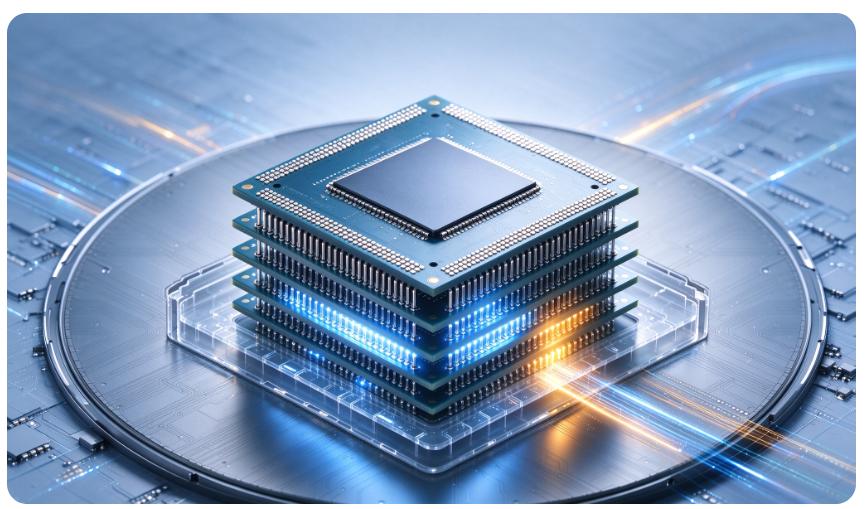
In September 2026, South Korean securities firms released a research report on the storage industry, pointing out that the current global high bandwidth memory HBM landscape is highly tense. The finished product inventory of Samsung and SK Hynix, two major overseas storage leaders, has fallen to the safety supply bottom line of less than 10 days. The massive storage demand brought by the outbreak of AI computing power continues to squeeze storage capacity, further exacerbating the supply-demand imbalance.
In order to seize the HBM market dividend, Samsung's wafer foundry has significantly adjusted its production capacity structure, allocating 50% -60% of its 4nm process capacity to produce HBM4 substrate wafers, corresponding to a monthly output scale of approximately 15000 wafers. With JEDEC officially finalizing the HBM4 industry standard, the interface width of the new generation product has doubled, and the maximum capacity of a single HBM can reach 64GB. In the computing power scenario, the HBM consumption of a single AI server is 8-10 times that of traditional servers, and the demand increment is extremely considerable. According to calculations, the current global HBM overall production capacity gap is as high as 55%.
On the supply side, the existing HBM production capacity of overseas original factories is basically locked in advance by top AI companies. Downstream AI chip design companies generally face the problem of HBM supply shortage and difficulty in obtaining cards, highlighting supply chain risks. This situation also forces the domestic industry chain to accelerate the pace of HBM technology research and industrialization landing.
Domestic storage manufacturers are synchronously promoting technological breakthroughs, and Changxin Storage's HBM3E product has entered the stage of small-scale trial production. Currently, domestic AI chip companies such as Pingtouge and Cambricon are conducting multiple rounds of adaptation and joint verification, with the goal of achieving small-scale production and supply by 2027, gradually filling the local HBM supply gap and providing storage support for the domestic AI computing power industry chain.
Tel: 0755-85280120
Email: georgeguan@goldone.com.cn
Head Office: Building 4, Room 505, Qianhai Kexing Science Park, Bao'an District, Shenzhen
Factory Address: 4/F, Building A1, Langxin Industrial Zone, Langxin Community, Shiyan Street, Bao'an District, Shenzhen